Similar Posts
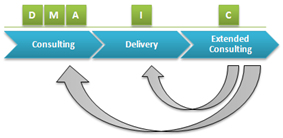
C-D-EC model: Consulting – Delivery – Extended Consulting/Collaboration Model
Are you faced with questions like,
‘Consulting – Is it an Expense or an Investment?’
‘Strategy – Is it just a jargon or a savior?’
‘Roadmap – Is it on track as planned? How do I do a health check?’
Corporates over a period of time had invested a lot of money in various tools and technologies to cater to the needs of various departments within their organization. This has now grown into a mammoth and has started to eat into their profits through licensing costs, maintenance costs, etc. Sometimes one has lost count of the number of application in the landscape, has no clue what a particular application is for, who is using it and why it was needed in the first place? The impact of this has become even more evident especially during the recession period as the IT budgets became slim and expectations from the top management to cut costs increased. The CIO now needs to strategize the IT spends to manage the cost within the budget. This paper tries to address where the CIO can start and how to leverage the services provided by various IT service providers.Read on to find out how the recession hit industries can leverage the consulting arm of the IT service providers to cut costs and at the same time get a futuristic view of their architecture / approach.
Article based on what I see at a Telco and one of my Tech clients.
We are spending a lot of time discussing how to make AI agents more capable. Are we overlooking another problem in the process?
What happens when the agent works, but nobody trusts the output enough to let it run?
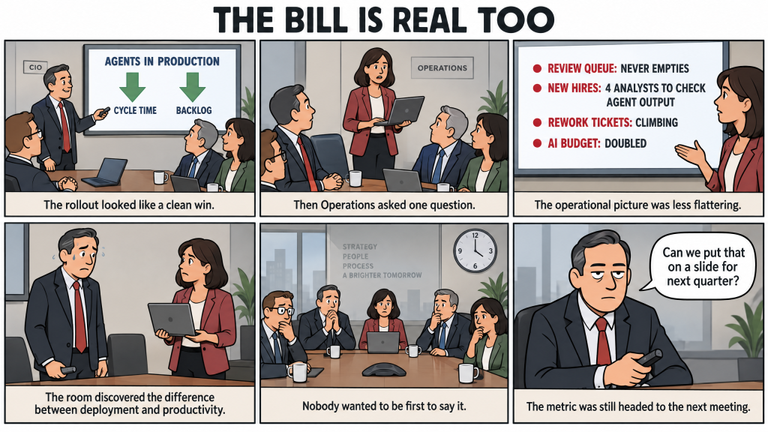
A recent G2 report calls this the “Distrust Tax.” The productivity gains we lose to human oversight, rework, and verification. I think there is more to this.
The Distrust Tax is a tax on ambiguity. AI just collects it.
Based on my experience, in many organizations, human judgment has quietly compensated for poorly defined processes, conflicting objectives, and decisions that rely on years of individual experience. AI agents expose that problem. And suddenly, what was previously absorbed by people becomes an operating cost.
I explore this through a simple framework: Ambiguity × Stakes, and why defining what good looks like may be more important than adding another layer of human supervision.