Why Your AI Agents Forget Everything Between Sessions (And How to Fix It)
If you’ve built with LLMs or vibecoded, you’ve likely seen it: the agent crushes a task in one session, only to waste the next one relearning basic context about your codebase, preferences, or past decisions.
LLMs are stateless by design. So, the challenge is how we architect memory as a true governance and learning system, not just a persistence layer.
A recent deep dive on “Designing Agentic Memory in 2026″ published in The Nuanced Perspective by Prahitha Movva, Aiza Hasib, and Aishwarya Naresh Reganti breaks this down through fresh 2026 research. Key insights:
- Not all memory is the same. We need to distinguish working, episodic, semantic, sensory, and procedural memory. Each demanding its own storage, retrieval, updating, compression, and forgetting logic. Most systems wrongly collapse them into one generic RAG-style index.
- Agent search behavior differs fundamentally from human search. Retrievers optimized for people (with position bias and few queries) underperform for agents that issue dozens of queries and browse more uniformly. Training on real agent trajectories (including failed runs) can deliver significant gains.
- True compounding memory goes beyond retrieval. Agents need architectures that let them learn and revise strategies mid-task, not just surface old logs. Systems that simply store more context often fail to translate experience into better performance.
- Memory is a trust boundary. Poisoned entries (from adversarial inputs or even innocent summarization) can persistently alter agent behavior across sessions, with high relapse rates. Treat memory that influences tool use or decisions like privileged execution paths with explicit segregation, permissions, and auditing.
Four practical design rules for builders (my takeaway):
- Name the memory type before choosing the tool.
- Align retrieval with how agents actually search.
- Test whether memory performance improves over repeated sessions.
- Treat memory trust boundaries like privileged execution paths.
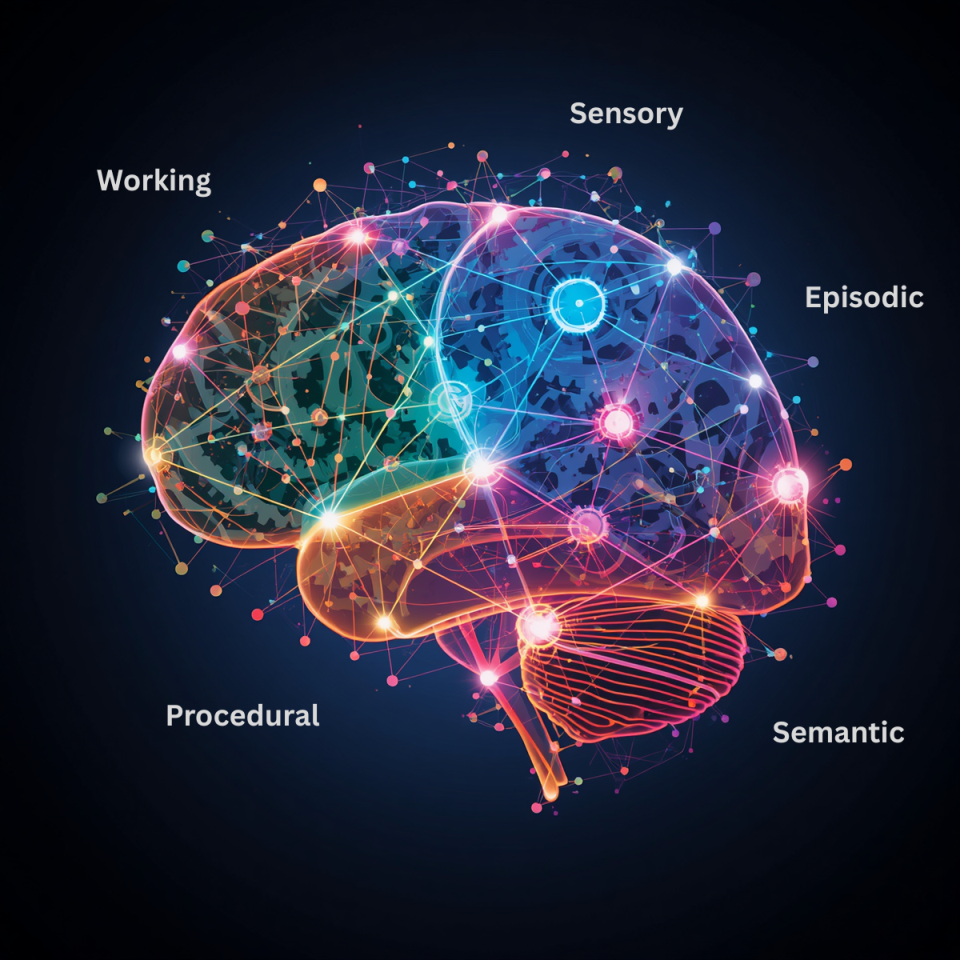
In short: Memory isn’t an afterthought; it’s core architecture that determines whether your agents merely remember or truly learn and evolve safely.
💡 Highly recommend reading the full deep-dive by the authors here: https://thenuancedperspective.substack.com/p/designing-agentic-memory-in-2026
AI engineers: As we push toward more autonomous agents in 2026, getting memory right will separate experimental prototypes from reliable, production-grade systems.
Share what challenges you have faced with agent memory in your projects. Have you seen compounding improvements across sessions or mostly the same loops? Curious to hear your experiences.
#AgenticAI #LLM #AIArchitecture #LLMOps #AIMemory