
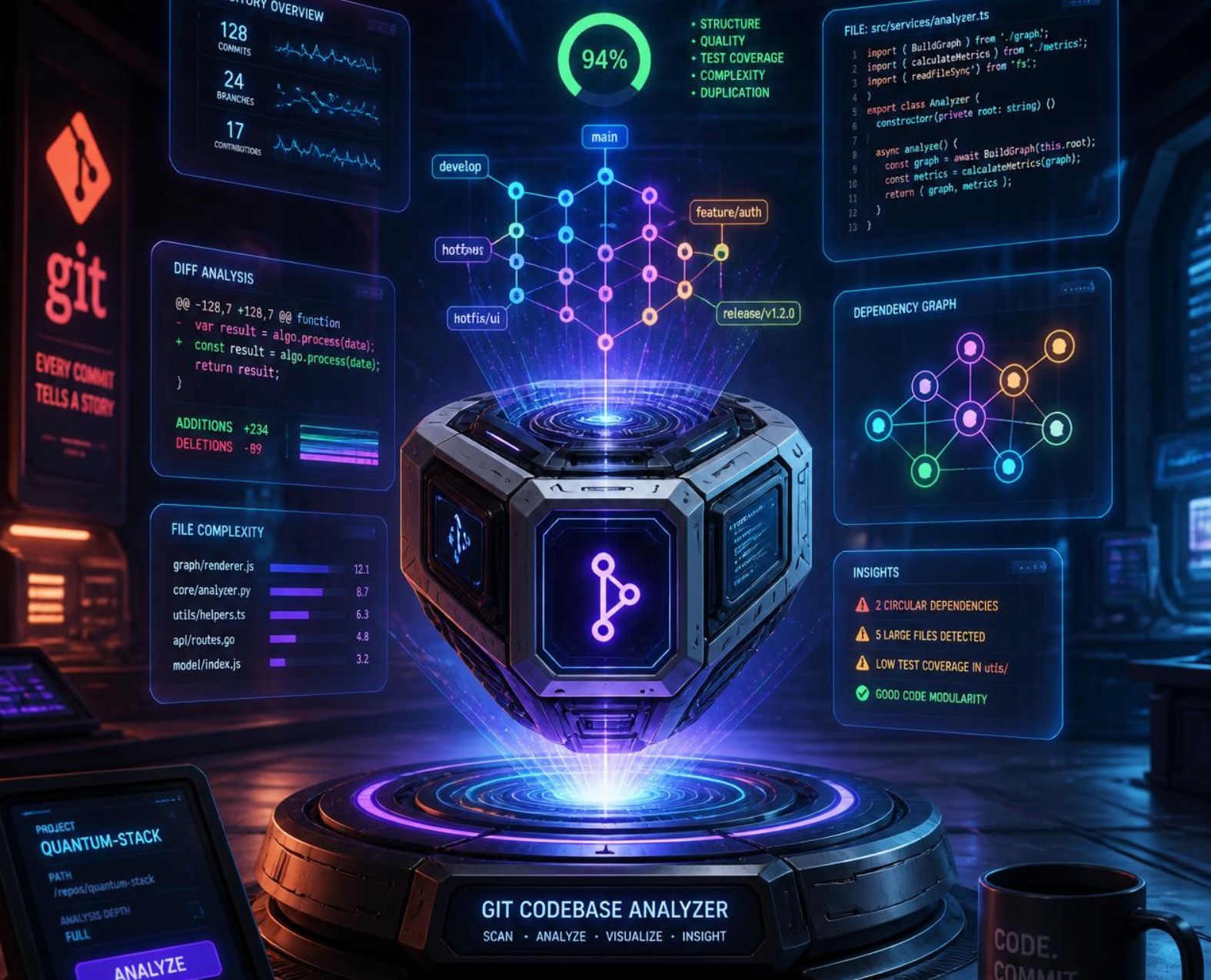
GitAlyzer: Giving PMs a Plain-English View of the Codebase
In my recent post on Graphify, I focused on how persistent knowledge graphs help seasoned developers and AI coding assistants get a reliable hold of large codebases. Graphify shines there: structural + semantic maps, queryable context, and far fewer tokens spent reconstructing architecture from scratch.
However, one realization quickly followed: that depth is good for “seasoned” engineers and models, but Product Managers (PMs), Product Owners (POs), advisors like me need something different.
When someone asks “Can we quickly add this feature?” or “Why will this change take two sprints?”, the conversation should not end with “Let me get back to you.”
We sit between business stakeholders and engineering teams. We need a way to evaluate technical feasibility faster, translate system architecture into business risk, and show up to sprint planning having done our homework. This way we can ask sharper questions about scope, dependencies, and effort so trade-off conversations are grounded in reality. Above all, not get taken for granted by the engineering team or left at the mercy of whatever complexity claim surfaces in the room.
In fact, support and triage teams face a similar challenge: they need to assess bug impact and trace dependencies quickly without getting bogged down in low-level code dives.
That gap is what prompted GitAlyzer. It’s a simple, lightweight tool made with Lovable that scans a Git repository (public or private) and surfaces accessible, actionable insights. For example:
- Dependency and architecture mapping: see how modules connect through imports, APIs, data access, events, inheritance, and other relationships.
- PR impact / blast-radius analysis: identify what else could be affected when particular files or components change.
- Codebase health signals: surface issues such as oversized modules, test coverage gaps, hub concentration, and orphaned code.
- Gaps and opportunities: identify areas that may deserve attention rather than relying solely on whoever happens to know the codebase best.
- Refactoring plans: turn identified issues into sequenced remediation steps and effort estimates.
- Architecture exports: generate artifacts such as an architecture document, graph snapshot, or PDF report.
Graphify vs. GitAlyzer: Right Tool, Right Purpose
To clarify: GitAlyzer is not a replacement for Graphify. It’s just a lighter, companion tool built for the business and product side of tech delivery. Where Graphify provides deep, queryable memory for AI coding tools and engineers, GitAlyzer provides high-level clarity, impact intuition, and clear communication for decision-makers.
Try Gitalyzer on your repositories, and let me know your thoughts in the comments!
👉 https://gitalyzer.jkspeaks.com/
GitHub:
👉 https://github.com/jkspeaks/gitalyzer
I would love to get honest feedback from Product Managers, Product Owners, and Leaders:
- Does this view give you enough context to frame technical trade-offs with stakeholders?
- What additional features would you like to see?
#ProductManagement #ProductOwner #AI #CodeAnalysis #DeveloperTools #Graphify #ImpactAnalysis #GitHub #Lovable #PM